Pages

Sunday, August 17, 2025

Blast from the past

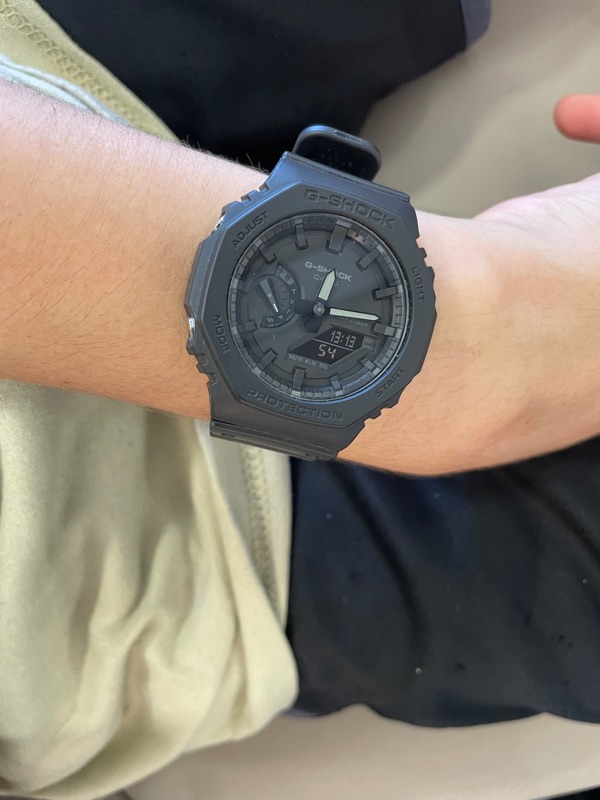
As you may be able to tell in this picture, The watch hands and the digital display do not match in time. Normally, I would have the digital displaying the time in Houston and the watch hands displaying local time.

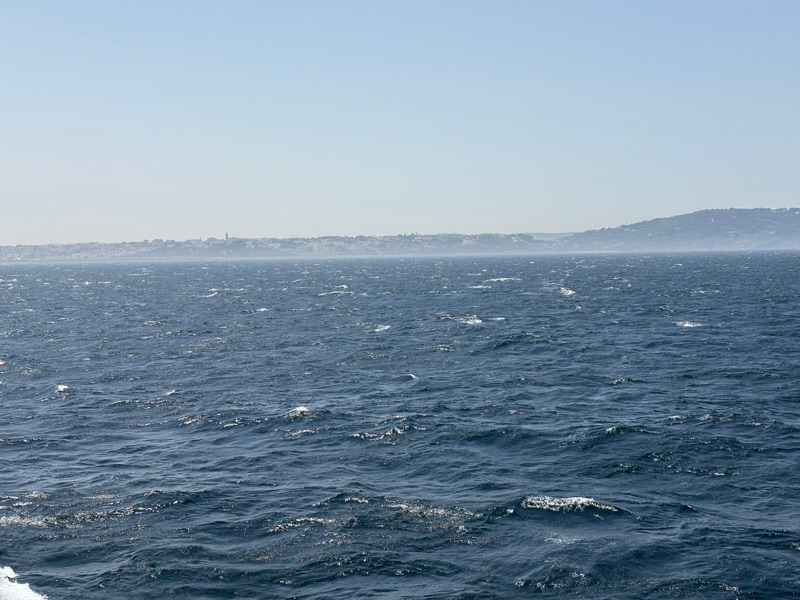
This day was different because we were going to Morocco, which is a hour behind Spain. Were we getting to Tangier via ferry which normally takes an hour since Tangier is only 18 miles away from Tarifa. If the boarding is quick enough this gives you an opportunity to experience the past (in a way.)

Another thing that made me feel like I was in the past is how long it takes for everyone to get their passport checked. I you don’t plan ahead you can easily spend most of the ferry ride standing up in the onboard passport check line losing your balance. There really isn’t no point in getting a good seat for the two reasons just listed: the trip is very short, and you will not be sitting down for most of it. This also means that you can kind of have whatever seat you want since nobody is sitting.

There were also many people who bought their cars on the ferry.

Where Ocean meets Sea, or Sea meets Ocean

One of the cool things about Tangier is its geographic location relative to the two continents of Africa and Europe. We were told many times that the land we see in the distance to the north is Spain and that it’s only 14 km away. On a clear day, you can even see straight to Gibraltar (no pun intended, well maybe).

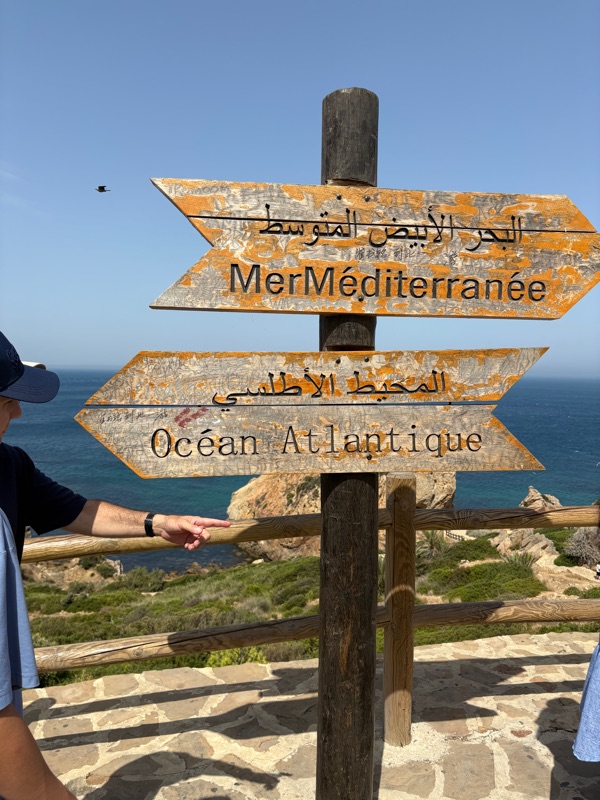
But being on the far northwest corner of Africa and situated basically at the entrance to the Mediterranean, there comes a certain point at which the Atlantic Ocean meets the Mediterranean Sea. And that point is known as Cap Spartel. As you might expect it’s a popular tourist destination and since we’re just being tourists, it’s something we had on our list of things to see and do.

Looking out over these two vast bodies of water I cannot begin to imagine what it must have been like to be a 15th century explorer setting off on a journey in a small wooden ship into wild unknown.

Tea time - any time of day

As you might expect, a significant part of experiences over the last week are related to the wide variety of new, interesting and (usually) delicious local culinary delights we encounter along the way. We could probably write an entire blog just dedicated to food and drink. But to make things a little more simple, maybe we can just concentrate on some of the main highlights.

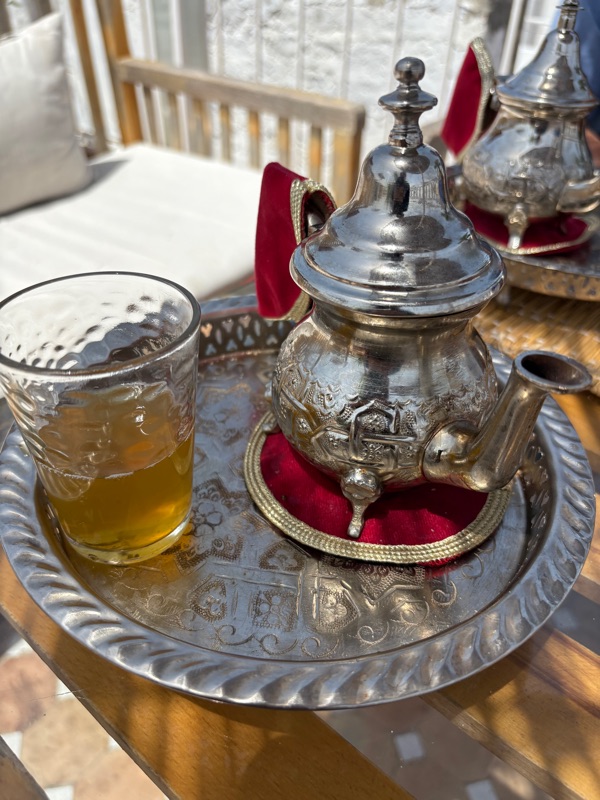
I’d have to say that near the top of that list is the mint tea that is so prevalent throughout Morocco and especially in Tangier. You wouldn’t think that a piping hot glass of sweet tea could be so refreshing, but we found it to be a relaxing way to take a break get refreshed and energized before moving onto our next adventure of the day. I understand that this is even more popular than drinking coffee in Morocco.

And the beauty of this delight is that it’s so simple to reproduce when we get back home. Seriously. I’m already missing that minty jasmine aroma.

For example, here’s one write up that I think captures the essence and the recipe quite nicely.

https://www.feelmorocco.travel/morocco/cuisine-recipes/moroccan-mint-tea/

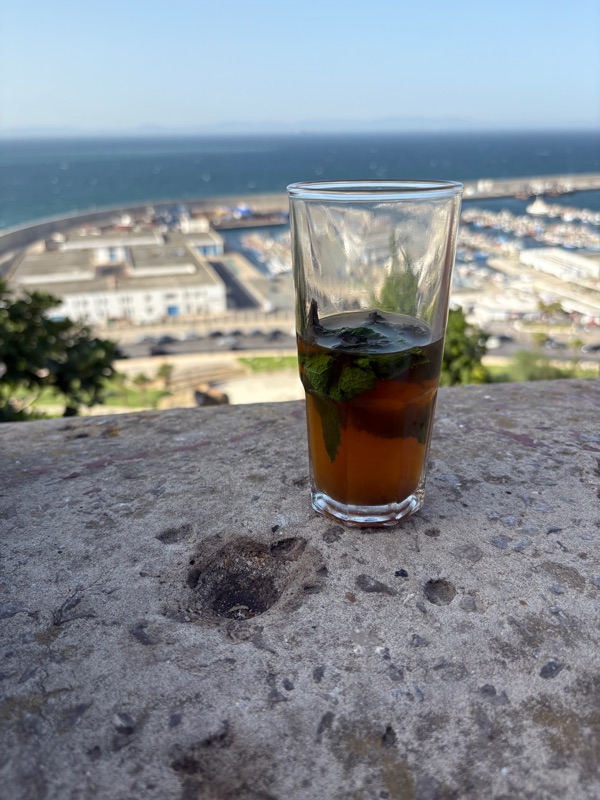
I’m definitely gonna have to give this a try when we get back home but somehow it’s just not gonna be the same as enjoying this delightful beverage while overlooking the Atlantic Ocean from a hillside perch on the walls of the Kasbah.

Saturday, August 16, 2025

Tánger, Tanger, Tangier, or Tangiers.

However you like to say it, this city on the tip of Africa, the Mediterranean, and the Atlantic ocean certainly has a special culture, but it may not be like you’ve seen in Indiana Jones and Hollywood films. I certainly was surprised when I entered the city how real some of the caricatures were, and also how fake some of the things from movies are. I won’t go too much into the history of Morocco but I’ll just say some of things I noticed.

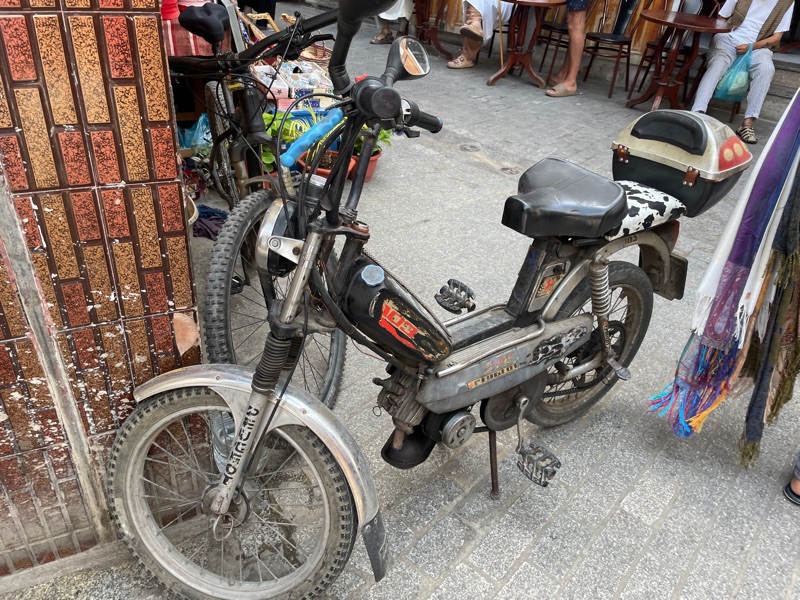
First thing I noticed was the traffic flow streets sometimes go two ways in impossibly inclined roads. Gates built for men and horses don’t fit modern cars very well so once you enter certain districts you have to park and walk. This is why so many people own a motorcycle or electric scooters. The motorcycles own the road around here though. They push the absolute limit of “safe” driving. Also I cannot over exaggerate how much the horn is used. What we are used to in america is the horn being an accessory, over in Morocco because there is zero road signs or stop lights and pedestrians everywhere, the horn seems to be more important than gears.
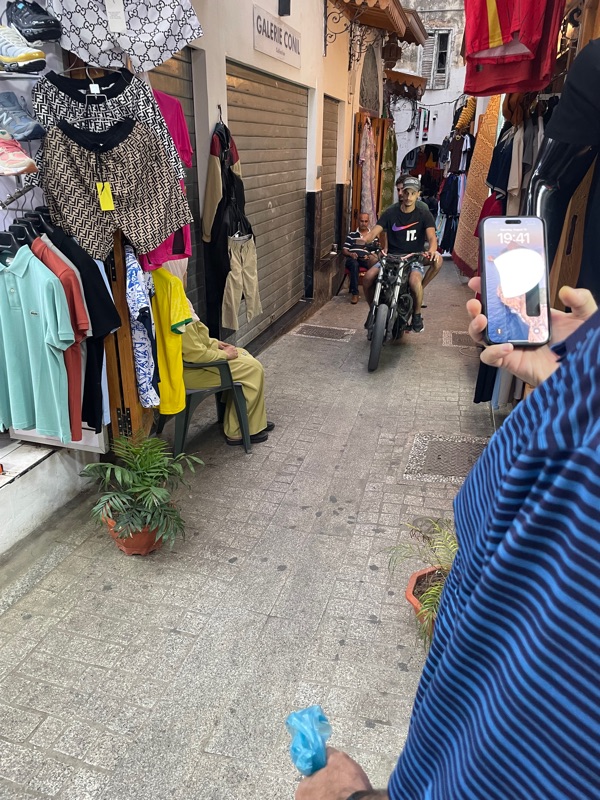
Also something worth noting is that there is not cruising here: you are either on the gas or brake at all times because of the steep hills.

Another thing you may have to get used to is not having A/C but that is something very easy to overcome due to the temperate climate.

Something that may take longer to adapt to is the air quality or lack of it, walk anywhere in the streets and you will smell like the fish market no matter where you are. You do not want to know what the fish market smells like, let’s just say It’s something like 100000 dead fish. I can’t tell you enough, I’ve never thought that AQI (Air quality index) would ever be something I would think about, but over here it may become an important part of your life.

Something that could take even longer to adapt to is that there are no trash cans. Did you read that correctly? No trash cans! It’s very interesting indeed you can walk a whole district without trash cans. The only thing that picks up trash is these people in blue suits that have garbage grabbers and trash bags, but there is still trash all over. people use the sewer as a trash can a lot. Look at this picture for example:
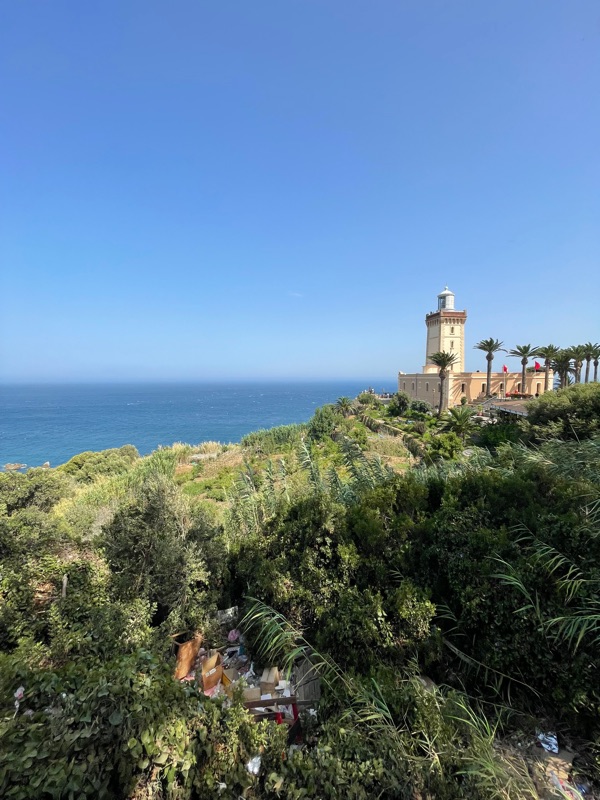
Great view of where the Mediterranean and Atlantic oceans meet, but there is trash all over.

Now for some unexpected and interesting things.

There are three official languages in Morocco: Arabic, French, and Spanish. Most surprisingly to me, a large majority of the people know enough to get by in 4 languages or more: Arabic, French, Spanish, English, and sometimes Berber, which is spoken by some natives here, meaning that we can communicate better here than is Spain.

Berber was named by the Romans because it basically meant gibberish in Latin; they couldn’t understand it. Berber is not just a language, it is also a style and culture. Berber designs in Morocco can be identified if you look for many colors, like muslim designs but bolder.

There two main religions here: Islam, and Jewish. Our tour guide explained to us today that you can tell what religion the house is because if it has a rectangular door it is muslim but if it has a circular top of the door and there is a david star or there are letters on it, then it is Jewish. Another way to tell is that Jewish areas are often painted blue while muslim areas are painted green sometimes. You will usually know when the muslims are praying because kind of like church bells, they will sing into loud speakers on the top of the mosque. They do this five times a day but it is only required to go to the mosque on Friday. Muslims like to come to Morocco from Saudi Arabia for vacation because it is legal for them to drink alcohol and have other freedoms here.

After the muslims pray, they eat couscous. The Moroccan cuisine consists of mostly just couscous, a dish called tajine, and salads. They also eat a lot of interesting bread products and vegetables.

In most places the special drink is mint tea. This sweet Moroccan special is always served hot with fresh mint leaves.

Something you may have expected but that I did not know what to expect is that most people seem to have cell phones. Since a lot of people make a living from shops in the streets you can see a lot of people on their phones watching fútbol or just on social media while they keep watch over their store.

The prices really depend on where you shop, for example, we bought everything that we ate at the Airbnb for 20 dirham, but if you eat out you can spend as much as 450 dirham for a table for 2. One euro is 10 dirham which means that 1 dirham is like ten cents. I really like the idea of 10 cents being the lowest transactional rate because no one really uses under 10 cents anymore.

The rooftop terrace wasn’t just an accident that we have it. Almost all old town buildings have access to a rooftop view. They are also very close together and it was said by our tour guide that women will often stay near the top of the house and when they are on the roof they can talk to their neighbors.

It is worth noting that is tanger there are two main parts to the old town: the Medina, and the Kasbah. The Medina is where you shop and many people live there. The Kasbah (meaning fortress) is exactly that. That is the area very closely surrounded by the walls that the Portuguese people built is the 16th century.

So many people were born here and have been on these streets all their lives so everyone knows each other and so do the cats.

Tanger, I am sad to say, is not a place I could live. I think it was a great experience and a culturing place but Sevilla felt much more homey with its A/C, 2 stories, a huge cathedral within walking distance, and trash cans. First time in Africa so I don’t have much base of experience. Let’s see what Granada is like!

A Most Holy moving day

Maybe it’s just me, but it felt like every day last week we were reminded that the Virgin Mary is the patron saint of Seville, and how much the citizens of the city revere, respect and honor her. On more than one occasion, we were reminded that the entire city turns out for a citywide procession honoring Mary on the day of the Feast of the Assumption. And I know from some prior research that this is not unique to Seville, but that many cities throughout Spain honor Mary in this way, and in fact, the day of the assumption is not only just a Holy Day of Obligation but still a national holiday throughout Spain.

What I had failed to realize was that the Feast of the Assumption is August 15 (Friday) and that we would actually be in town (briefly) on that day. Friday also happened to be our travel day from Seville to Tangier.

My realization happened on Thursday evening around 9:30 as we were walking our evening paseo past the cathedral and heard beautiful chorale music and saw large crowds gathered outside the entrance. And that’s when it occurred to me that this must be the evening Vigil Mass. And it was filled to overflowing, with onlookers trying to peer in behind the security guards.

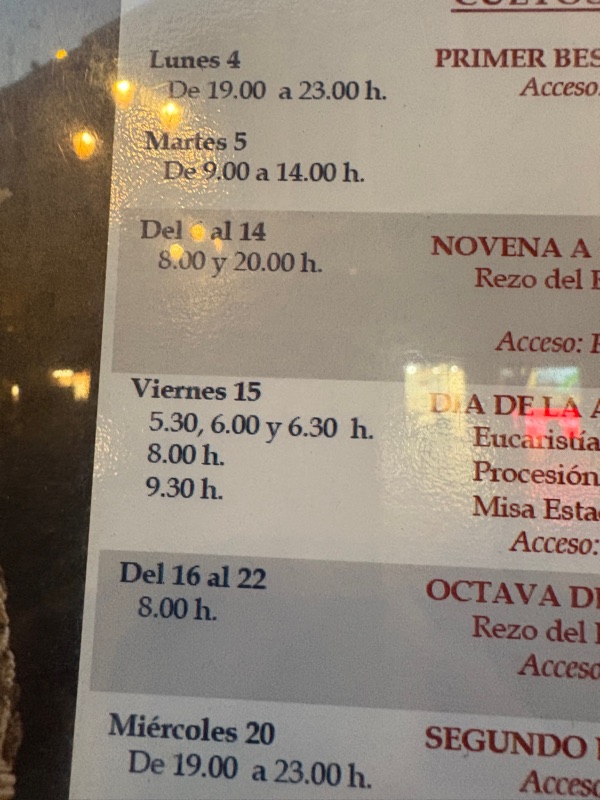
My disappointment at missing the Vigil, however was quickly forgotten as I noticed the posted Mass times for Friday morning - 5:30am, 6:00am and 6:30am - which meant that there was still a chance to get to Mass prior to our scheduled 8am bus ride to Tarifa/Tangier. But we still needed to get home, packed and ready to roll the next morning.

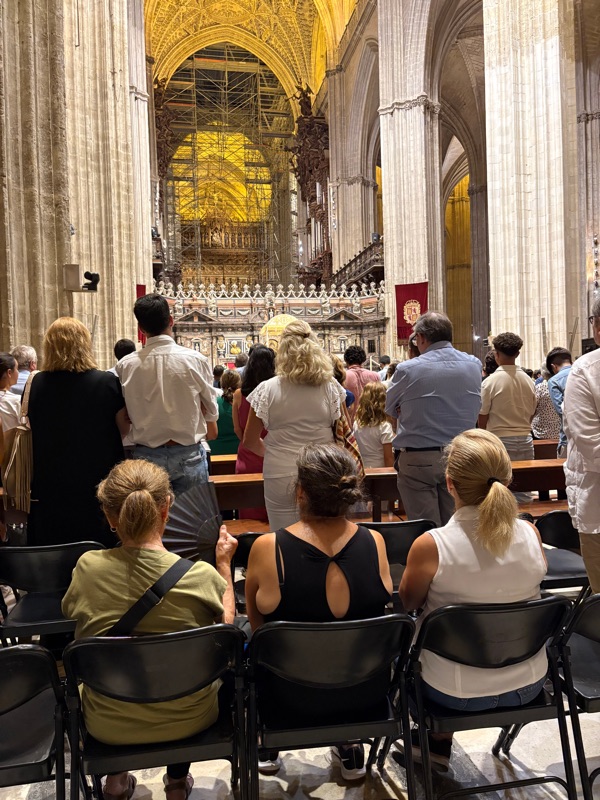
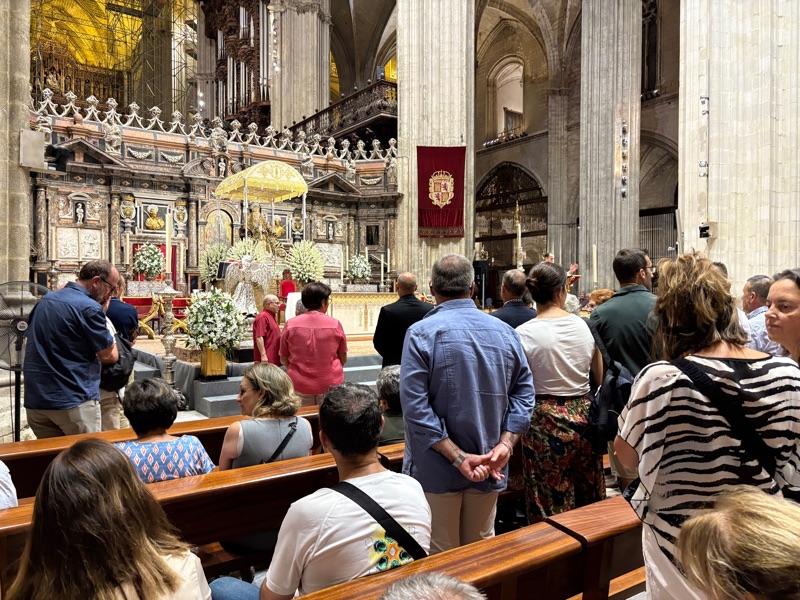
We opted for the 6:00am service and the streets were still dark and quiet as we made the 10 minute walk. That is, until we approached the cathedral, which was already packed with parishioners from the 5:30am Mass! That was really a sight to behold that the cathedral was full for a 5:30am Friday morning service. But such is the Marian devotion in Seville.

We found our seats and no sooner had the 5:30am Mass ended when the 6am started, even as people were simultaneously filing in and out.

And clearly there was going to be a large outdoor procession later that morning. People were dressed as if preparing to carry floats, the streets around the cathedral were taped off and (even though it was still dark outside, people were already claiming their spots along route by setting down chairs on the street.

When our Mass was finished, we rushed back home just in time to catch our Uber and we were off yet again on our next adventure - bus to Tarifa, then ferry to Tangier!

Friday, August 15, 2025

Cathedral or Mosque?

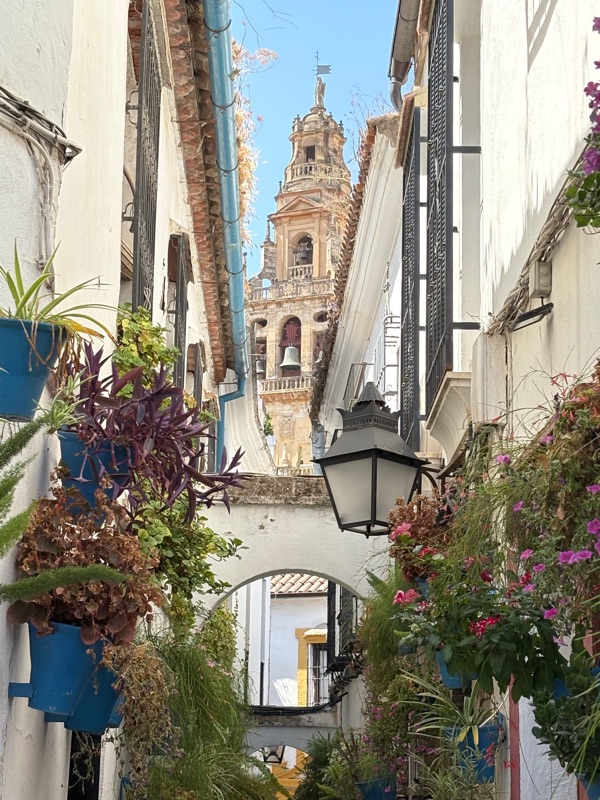
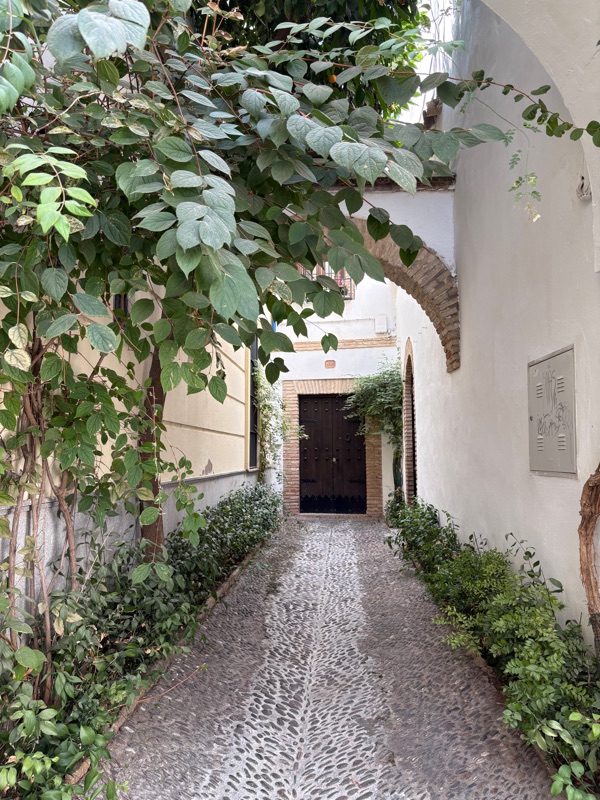
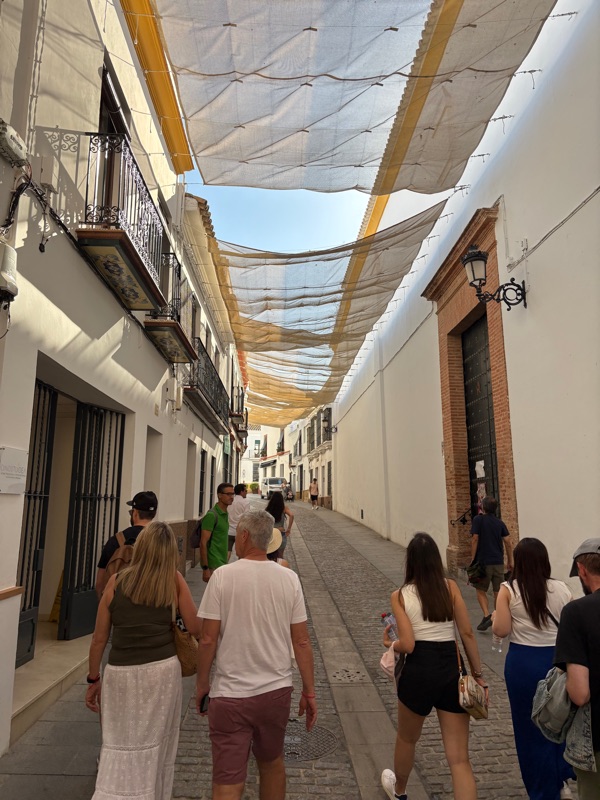
Cordoba is a charming small town with narrow streets and high, white washed walls. Our guide likened walking through town to being in a maze, and looking back, I would have to agree. But the high, white walls and narrow passages of the Jewish quarter serve the purpose of keeping the sun off the ground for most of the day while at the same time reflecting the bright hot sun rather than absorbing it into the buildings.

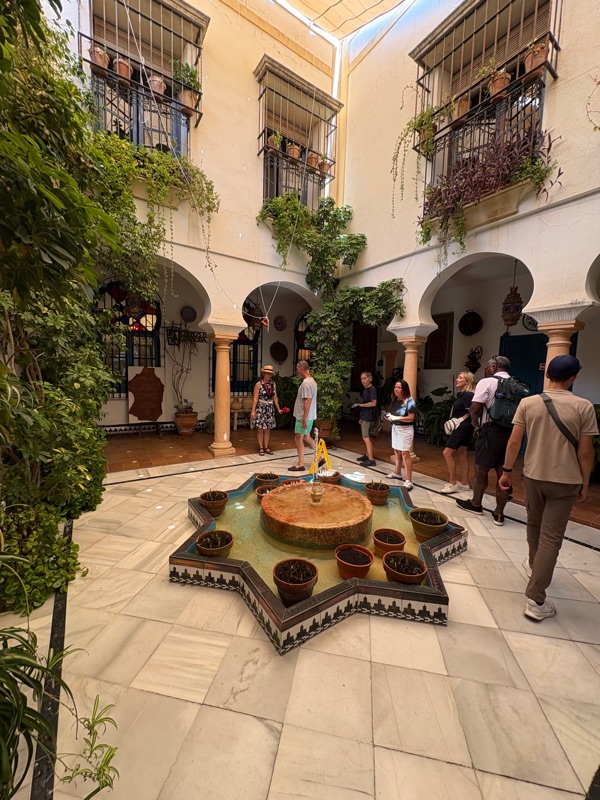
The town’s natural beauty is enhanced by the variety of trees, plants and flowers found throughout the numerous paths and walkways. The residents are pretty proud of their patio gardens and hold an annual competition each May to determine who has the best in the city.

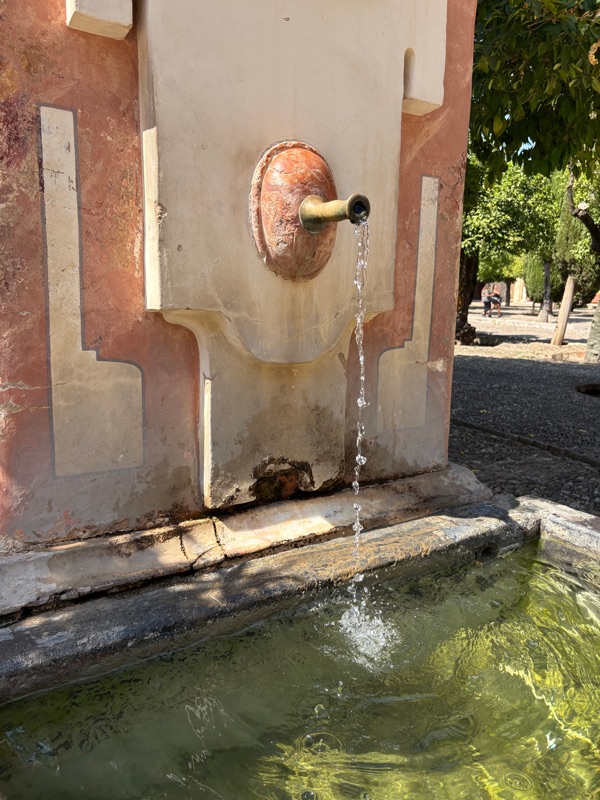
There are even several “natural” water fountains throughout the city where you can freely refill your water bottles or freshen up from the effects of the hot afternoon sun.

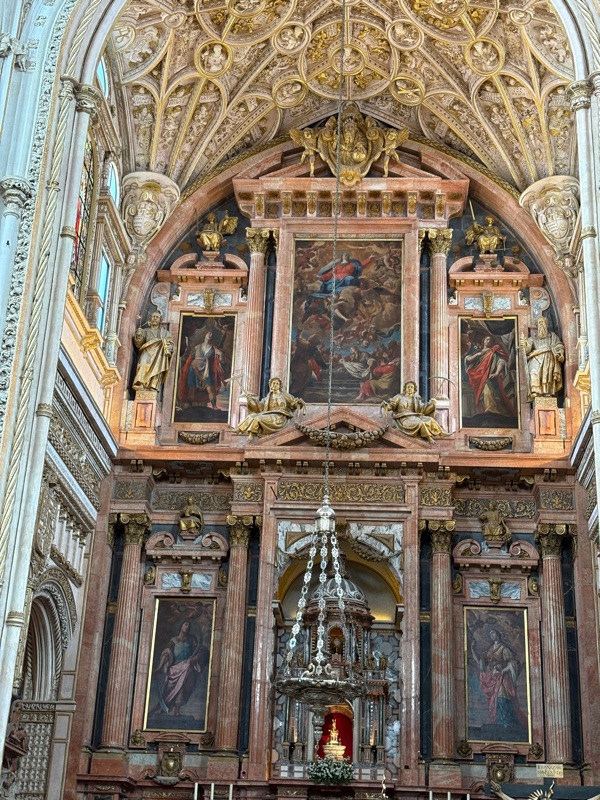
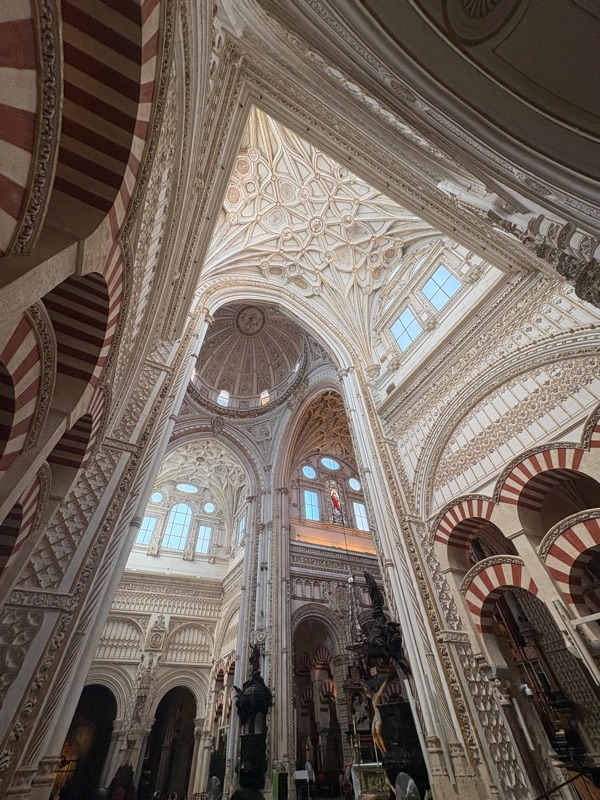
But as nice as all that is, that’s not what brought us there yesterday. No. What brought us, and millions of other people every year, to Cordoba was the opportunity to see the famous Cathedral-Mosque.

But wait…which is it, a cathedral or a mosque? That was Matthew’s question as we prepared for our morning bicycle ride to the tour pick up location 10 minutes away. All I knew was that we had to wear pants out of respect for the temple, regardless of the soaring temperatures.

It was while looking up the dress code, that I also learned something else that temporarily shocked me. I read that there had been a fire at the temple (a UNESCO World Heritage Site) last Friday, only five days ago! Had we come all this far only to be denied at the last minute?

The good news is that the fire was discovered quickly and contained by the local fire department before too much damage was done. So, crisis was averted and the site remained open for visitors (although construction crews are already on the scene performing restoration work).

So, after a well deserved lunch break, we finally arrived at our destination.

Our guide first explained to me that the whole “wearing pants thing” didn’t apply in the heat of summer, which explains why we were probably the only two people in the city wearing pants! That’s what I get for being a lifelong rule follower.

Once inside however all of that was forgotten as we began to experience the unique beauty and magnificence of the temple.

There is so much history and tradition to this place but here’s a short summary.

During the period of Muslim rule, in the ninth century, when Cordoba was the seat of government, a Mosque was constructed to hold as many as 5000 worshipping men at a time. Sometime later the southern wall was torn down in order to add additional capacity, doubling the number of worshippers to over 10,000 at a time.

Hundreds of years later, during the Catholic Reconquista, Cordoba came under Christian rule. Normally the practice at the time was to tear down the Mosque and build a Cathedral on the same site. This time, however, the local church was so poor that recognizing the treasure of the temple and its possessions they devised an alternative plan.

That new plan was…Holy Water!

The Church decided that by simply sprinkling holy water throughout the temple (essentially “baptizing” the building) that they could achieve the best of all possibilities - save on demolition and reconstruction costs AND start using the building as a cathedral too!

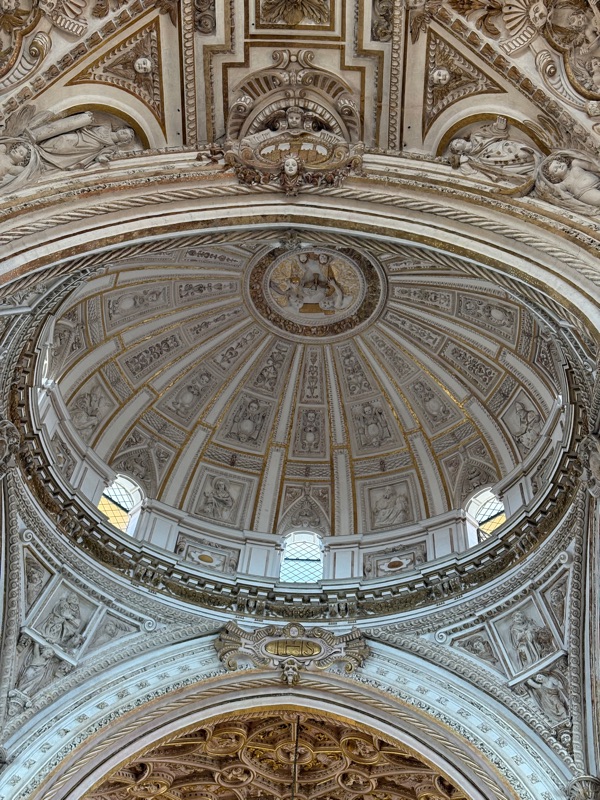
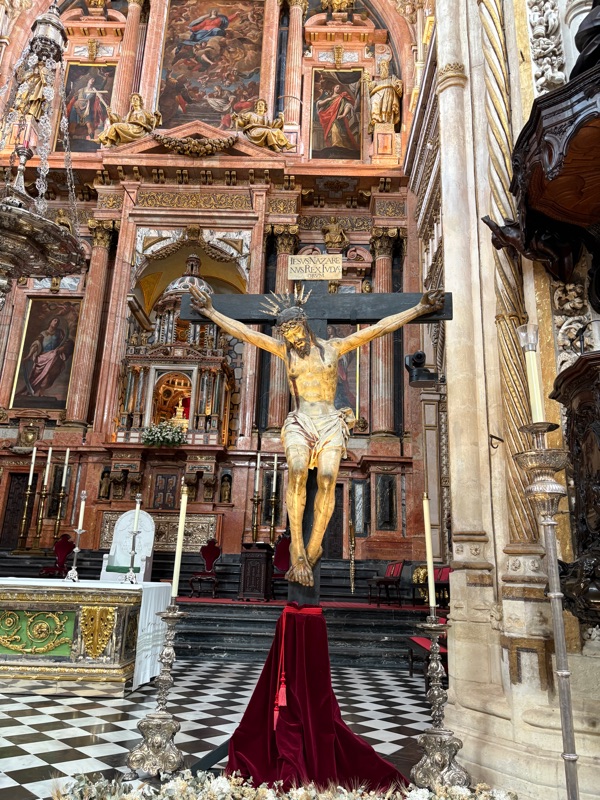
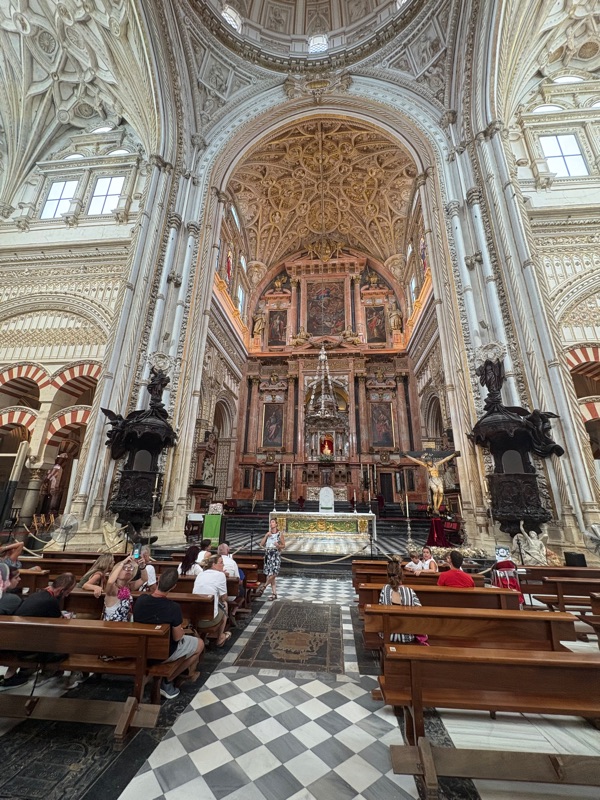
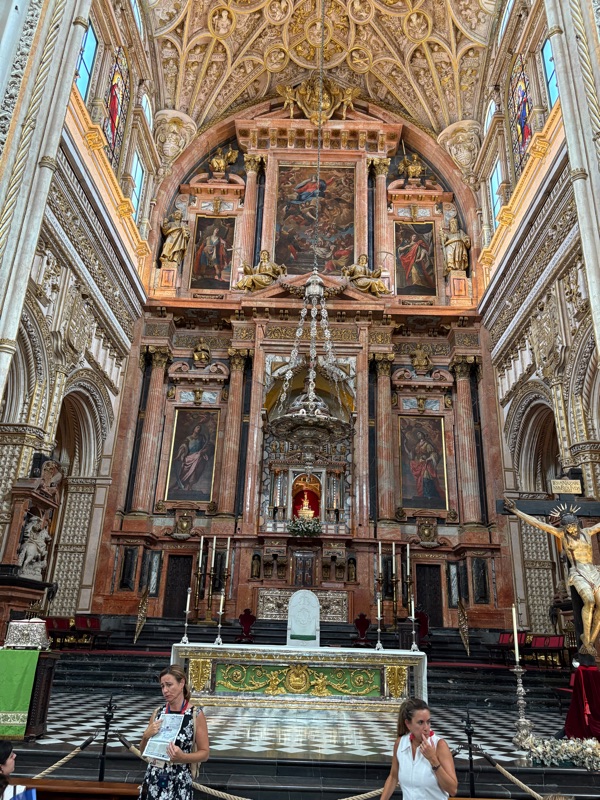
So, an ornate cathedral was constructed within, along with dozens of beautiful Chapels (funded by the wealthy as a means of ensuring their place within the cathedral -as well as within heaven) around the perimeter of the interior. And once again, the capacity was further expanded, making it the largest Cathedral in the world (at that time, before the size of modern day St. Peter’s in Rome.

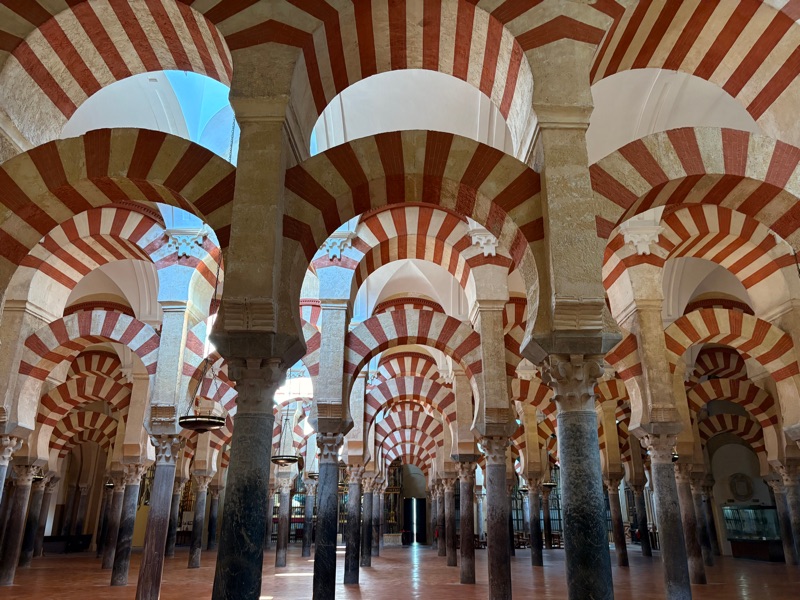
Hundreds of years later, the result is what we can see today. Officially known as the Mosque-Cathedral of Cordoba, the temple is not a Mosque, but if it was it would be something like the third largest in the world, behind only Mecca itself and the Blue Mosque in Turkey.

As for its present status as the largest cathedral, well, remember that the cathedral was constructed within the interior of the mosque and to this day only occupies a small percentage of the buildings total square footage. Think of it as a church within a church or, more specifically a Cathedral within a former Mosque. Either way the actual square footage of the Cathedral puts its status nowhere near the top of the list of largest churches today.

Nonetheless, the Cathedral’s history is assuredly one of the most unique and fascinating and it remains one of the world’s most beautiful.

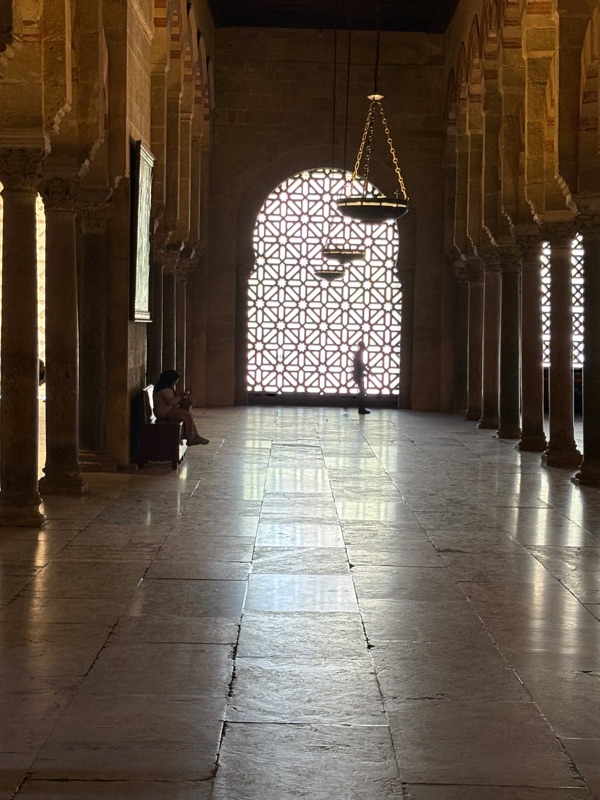
Take a look at these photos and see if you agree.

Just another small town neighborhood church?

Yesterday was set aside as a day trip guided tour to the city of Cordoba, about a 90 minute drive from Seville. Like most of the cities in this region, Cordoba has a deep and rich history dating back to Roman, then Visigoth, then Muslim rule, eventually giving way to Christian leadership. Every culture has left their mark on the customs, traditions, architecture and even the local cuisine.

Over the years, Cordoba served as everything from a region outpost (Roman times) to the Andalusian capital city. A river runs through the center of town and olive cultivation began thousands of years ago. To this day Spain remains one of the world’s top two olive oil producers and the Cordoba region is a top producer within Spain. We passed by miles and miles of olive orchards on the morning drive.

Our first stop, however, was the town of Carmona where we were given 30 minutes to walk through town and see the sights before moving on.

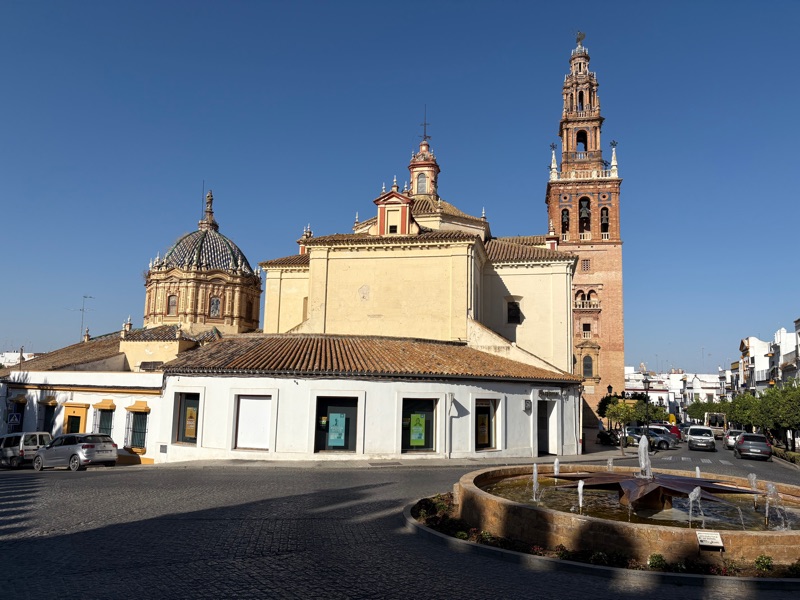
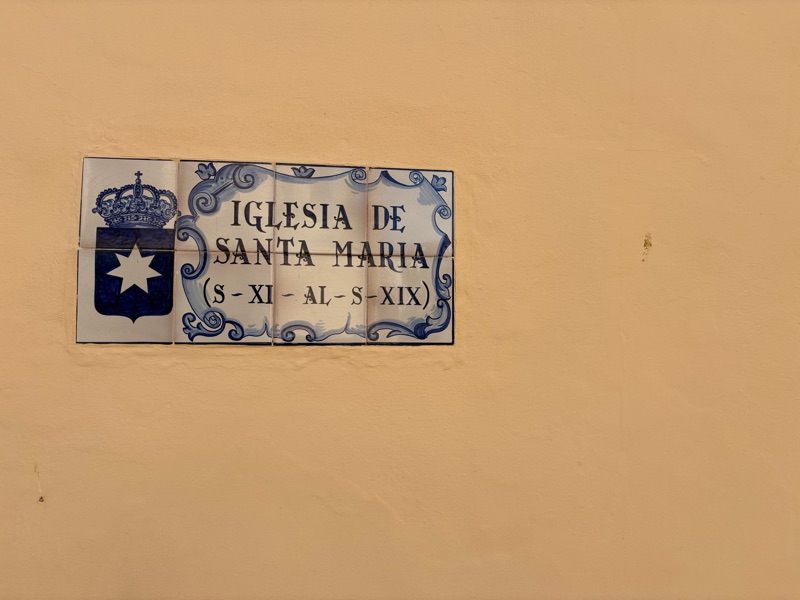
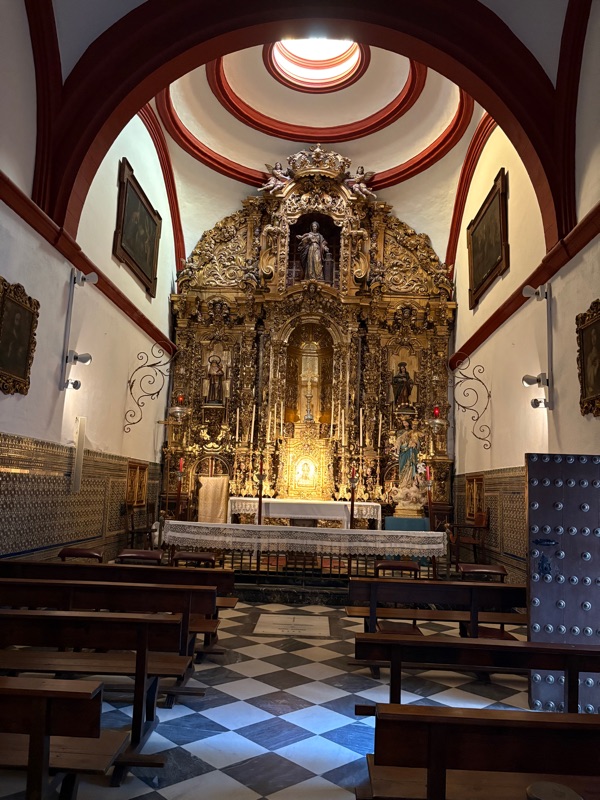
We chose to spend our few minutes at the local neighborhood church on the corner (and across the street from another Catholic church) known as St. Mary’s.

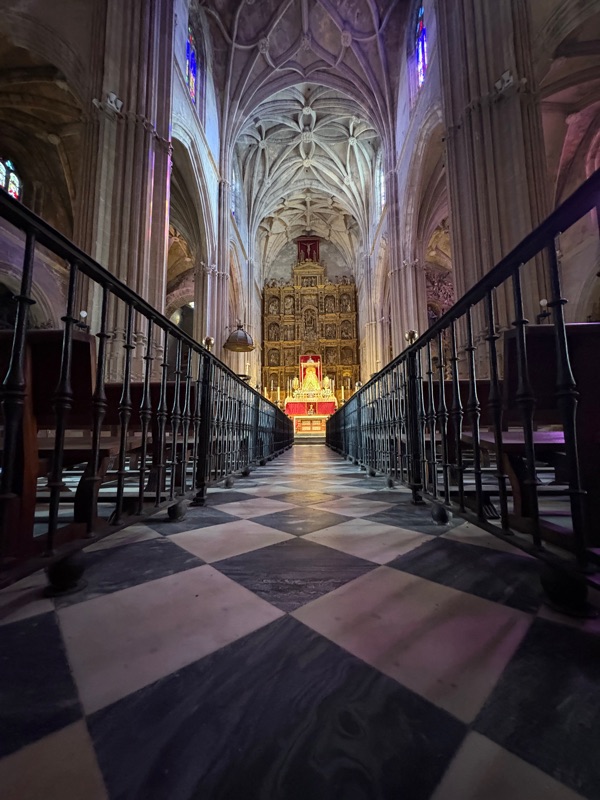
St. Mary’s may just be “the neighborhood church on the corner”, but that doesn’t mean that it’s just another church. This seemingly simple neighborhood church would easily pass as an impressive Cathedral in many other parts of the world, including many US cities!

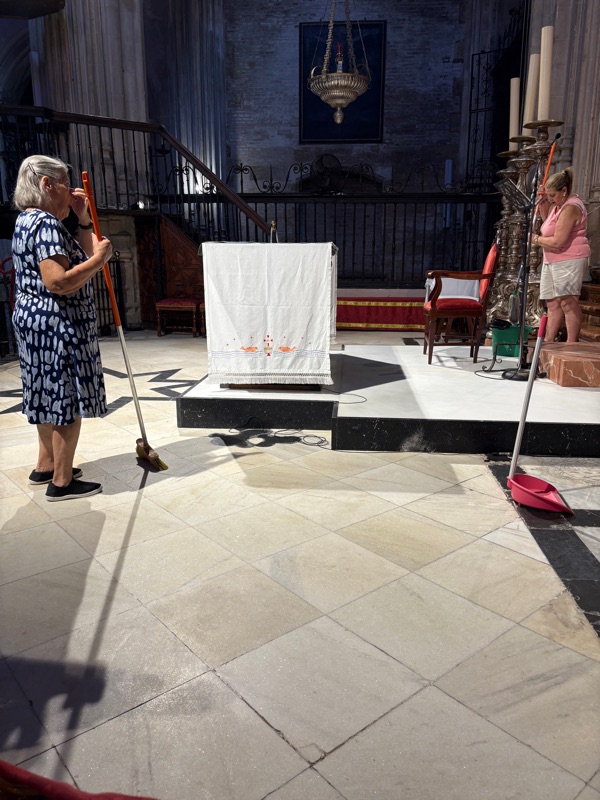
And yet, in so many other ways this church is very similar to our own local parishes. Take, for example, the volunteer parishioners who happened to be cleaning up around the around the alter at the time we were there.

All of which just goes to show you that no matter how grand, how beautiful or how historic, the significance of the church is ultimately about its people and the community it serves and who serve it.
Thursday, August 14, 2025

All he wanted was a bath

As I’m sure you’ve heard by now, it’s been a hot week in Seville - like Arizona or Nevada hot! I noticed on one of our bus rides home today that the temperature gauge read 44° Celsius (you do the math).

Nonetheless, as I’ve said before, it’s a dry heat so oddly enough, it’s bearable as long as you take a few precautions like carrying a bottle of water everywhere you go and staying in the shade instead of the sun whenever possible. Let’s face it. People have lived here on the Iberian Peninsula for thousands of years so it’s certainly possible to cope and adapt with the climate. And in fact, when the sun goes down, the city comes back to life again until well past midnight.

Even so, it’s become routine this week when returning to the apartment in the afternoon to take a quick shower and change clothes in order to expedite the cooling off process.

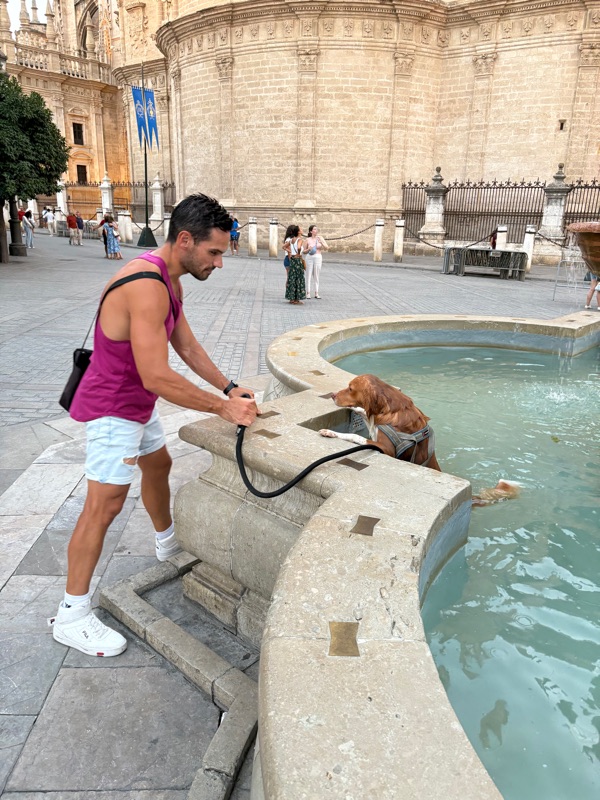
So it should come as no surprise that this evening, following an hour long bike ride, as we walked our Paseo through the Jewish quarter and passed the Giralda Tower we encountered a man walking a dog that suddenly and without warning started barking excitedly as if he had seen a squirrel or duck on the other side of the fountain that he wanted to chase after.

Just as quickly as I could look up and turn my attention to them, the man reached down, picked up the dog and gently placed him inside the fountain, where upon the dog stopped barking. It turned out that all he really wanted was a quick bath to cool off before finishing the rest of his walk.

As we passed by the man smiled at me as if to say “He thinks the fountain is his own personal bathtub.” By that point the dog was shaking water all over anyone within a few feet.

All I can say is that I know that feeling! We’re all in this together. Hang on pup! Fall is on the way and cooler days are ahead.

Siesta time

They just live here

In the time that we’ve been in Spain it has been interesting to see the familiar and unfamiliar animals that have come to our attention.

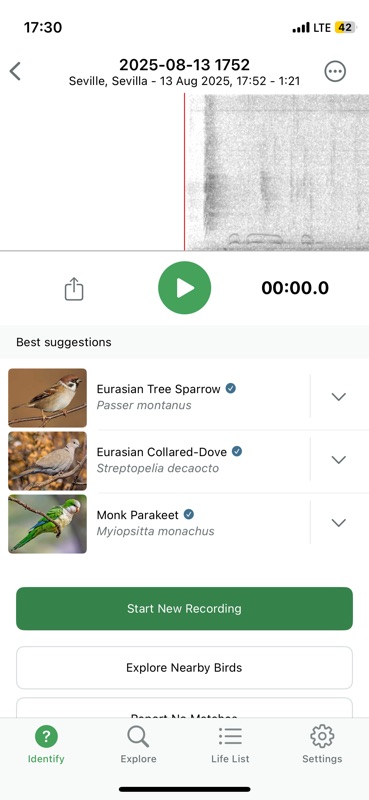
Yesterday was a very notable example when we were exploring the Palacio de las Dueñas and it was impossible not to hear the screams of Parakeets. I had previously downloaded the Iberian peninsula bird ID pack to my bird identification app. I quickly turned on the app to see what the bird was and the result was not very surprising but there were two other birds I wasn’t expecting:

The parakeet and the dove are pretty common but the sparrow wasn’t expected. It wasn’t just passerines though!

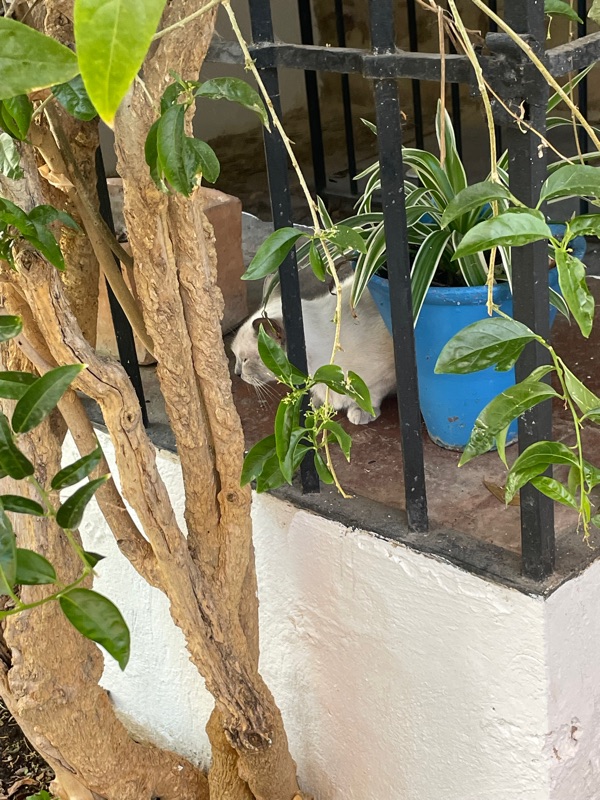
As we went to the play at the Real Alcázar yesterday there was a cat just taking a stroll in some of the most renowned rooms of the royal palace. It is unclear if the cat knew where it was or lived far in the gardens, but it seemed to show an adequate amount of respect for the palace.

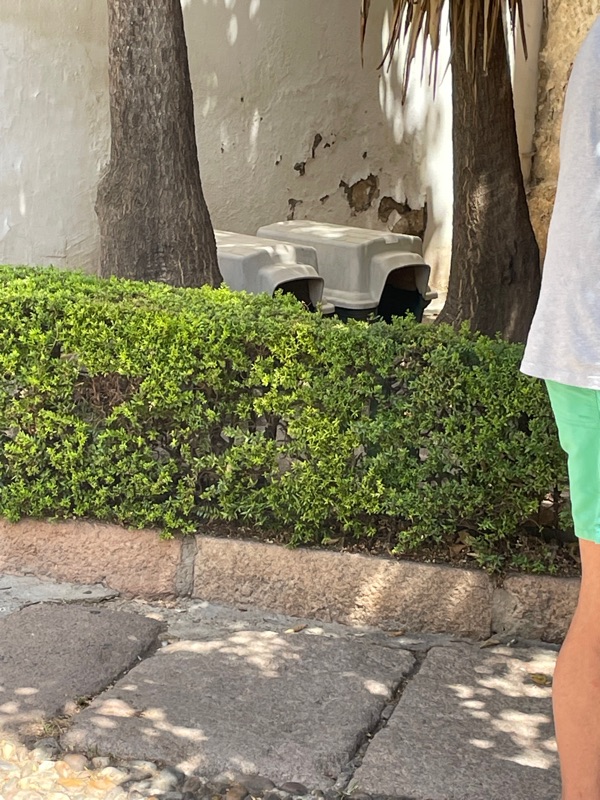
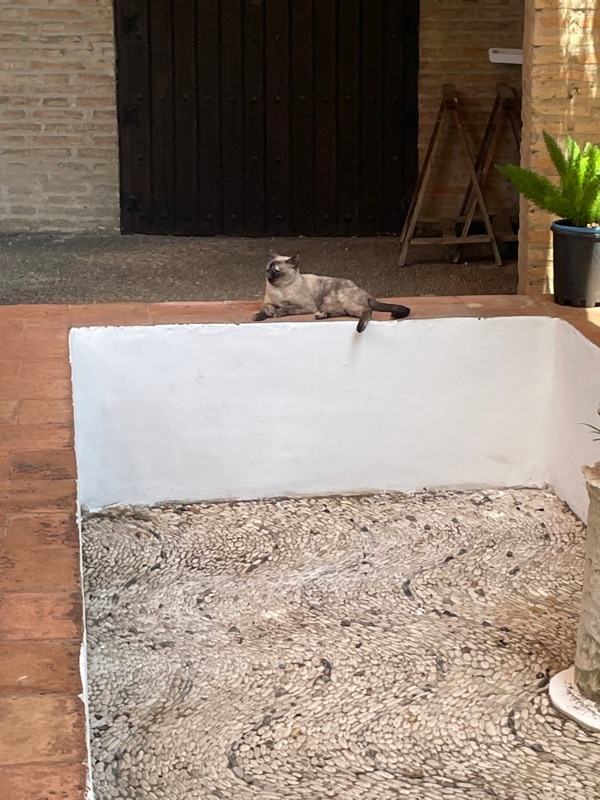
As we strolled through Cordoba this morning, our tour guide showed us a new project the city had been working on that intended to protect feral cats in the area:

At corners like this all over the city they a making an effort to protect the lives of the cats! And like the tour guide said look for the cats to find the most temperate and comfortable place.

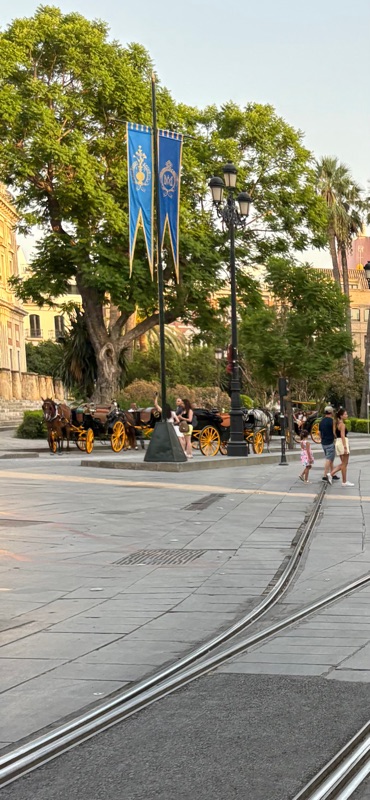
On the night we arrived in Sevilla it was impossible to not notice the distinct sound of horse’s hooves striking the brick of the street around the cathedral and Alcázar. I am sure there is more of a story to these horses but as far as I know they just move guests around the plaza in fancy carriages.

Keeping it Real…at night!

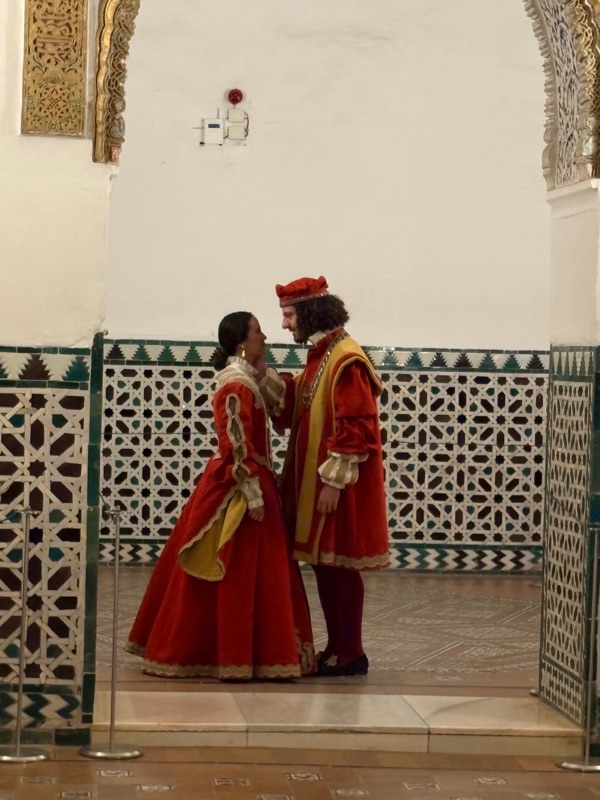
Afew weeks ago, while I was online booking our tour of the Real Alcazar, I noticed that there were additional tours offered, including one entitled “A theatrical performance of the marriage of Isabel of Portugal to Charles II of Spain”. It went on to explain that this was a nighttime performance beginning at 9pm. But the tickets were relatively inexpensive so I said “Why not?” without really knowing what to expect.

It was still daylight upon our arrival last night but the sun was setting as the performance characters (all dressed in period costumes) greeted us and welcomed us into the palace grounds. They ushered us from one station to another as they explained in character (and in Spanish) that the Princess Isabel had arrived at the palace in preparation for the arranged marriage to Charles II (whom she had not yet met).

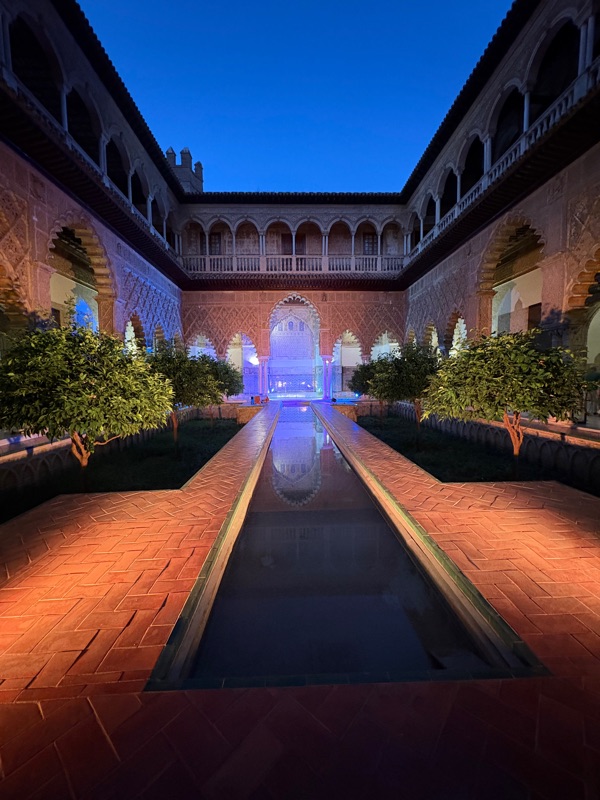
In reality, what they were really doing was guiding us on a tour through the palace, but in a much more fun and creative manner than the usual tour routine. Our crowd size was a few dozen people as opposed to a few thousand people earlier in the day and since it was past sunset the temperature was about 20 degrees cooler as well! And of course the grounds were lit up beautifully in anticipation for our arrival.

But first we had to be granted access to the palace. One of the characters explained (in character) that we were mere “commoners” and therefore not permitted to enter. It took some persuasion on the part of our host (narrator) to gain us access. She convinced the palace princess that we were “from the future” and that she would enchant us with an “invisibility potion” so that the royal court would never even know that we were there.

If you’re getting the impression that this was an interactive and engaging theatrical experience designed to entertain and educate the audience then you’ve got the right idea. And the added bonus was experiencing the Real Alcazar by night.

As we were ushered through all the rooms that we had seen earlier in the day, the feeling was totally different by night. Each stop introduced us to another new character who added to the storyline.

They really limited phone usage so we didn’t get many pictures which is too bad because the lighting effects were really terrific.

Eventually, Charles was introduced to Isabel and it was love at first sight.

And the rest, as they say, is history. Only this time it really is history, and a fascinating history, at that!

Lost in translation

I can’t tell you how many times over the last few days that we’ve encountered interesting challenges with the Spanish language. First of all my command of the language isn’t great to begin with, but decent enough to get by. As always, I understand conversations much better than I can speak them myself.

Secondly, the “Spanish” spoken here is really Castilian, which has different sounds and even vocabulary than I’m accustomed to.

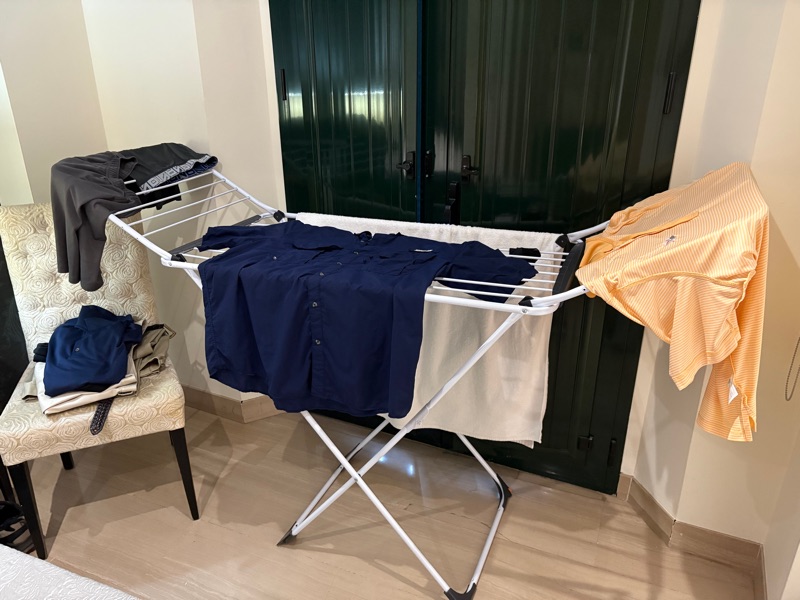
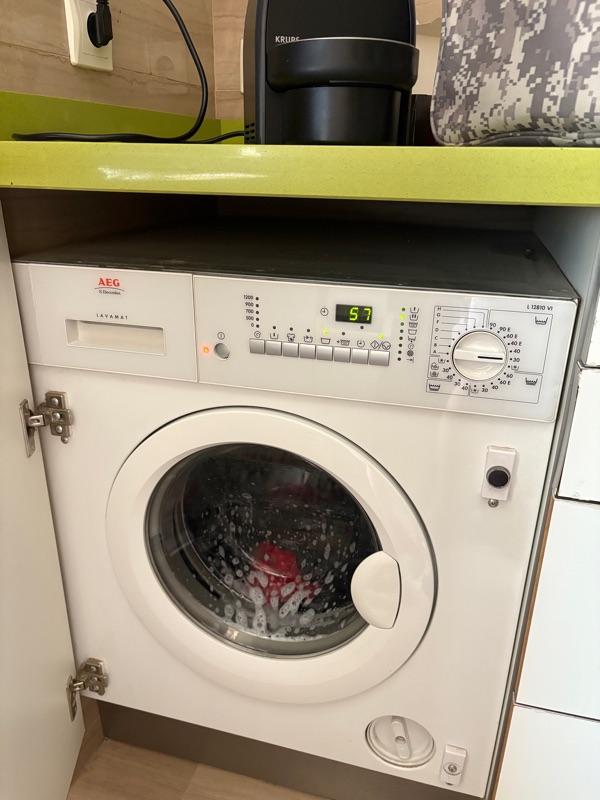
Yesterday I asked my host for advice about how to dry our clothes after washing them in the washing machine conveniently located in our kitchen. Weeks ago, when booking our Airbnb stops, one of my criteria was that it have a washing machine. Most places didn’t have dryers so I just decided that we would figure that out upon arrival. Now it was time to figure it out.

As you can see, he directed me to find a clothesline in the closet. Despite my doubts about how we were going to string up a clothesline in the apartment, I began my search. Several minutes later, with no clothesline in hand, I had a thought that maybe something got lost in translation.

Thats when I discovered a clothes drying rack neatly folded away in one of the closets! It took me a google search to figure out how to use it, but sure enough it worked great. The climate is so dry here that it takes no time for clothes to be wearable very quickly!

Now…as for getting the washing machine to work in the first place, that’s a whole different translation tale. See if you can figure out how to decipher the hieroglyphs printed on the control panel.

Wednesday, August 13, 2025

Travel Pro Tip #39

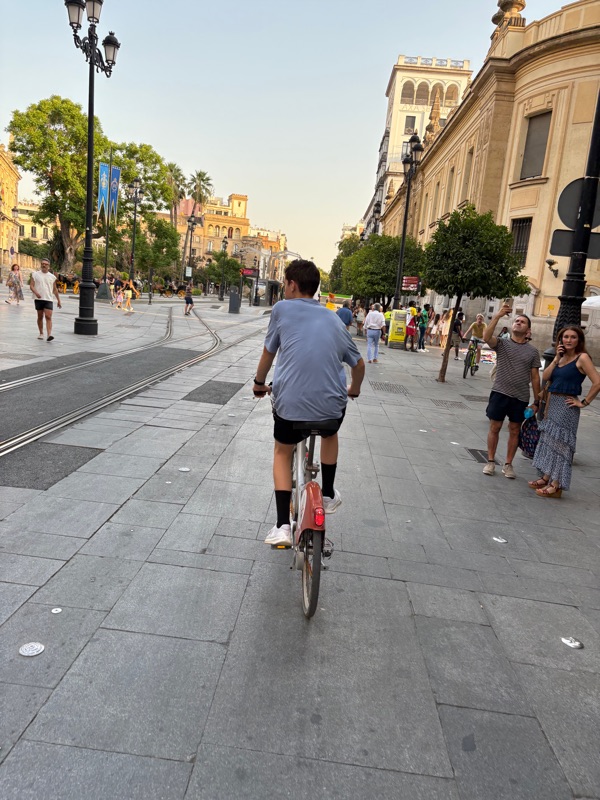
Ride share bikes are a great and inexpensive way to get around the city…until you find yourself riding on 500 year old cobblestone and brick roads. That’s when you wish you had a little more padding on your bike seat!

Keeping it Real (Royal, that is)

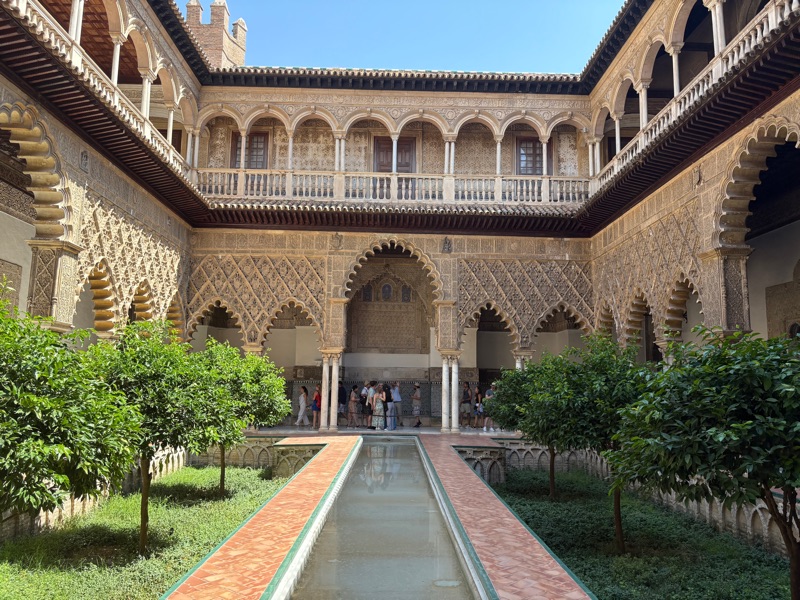
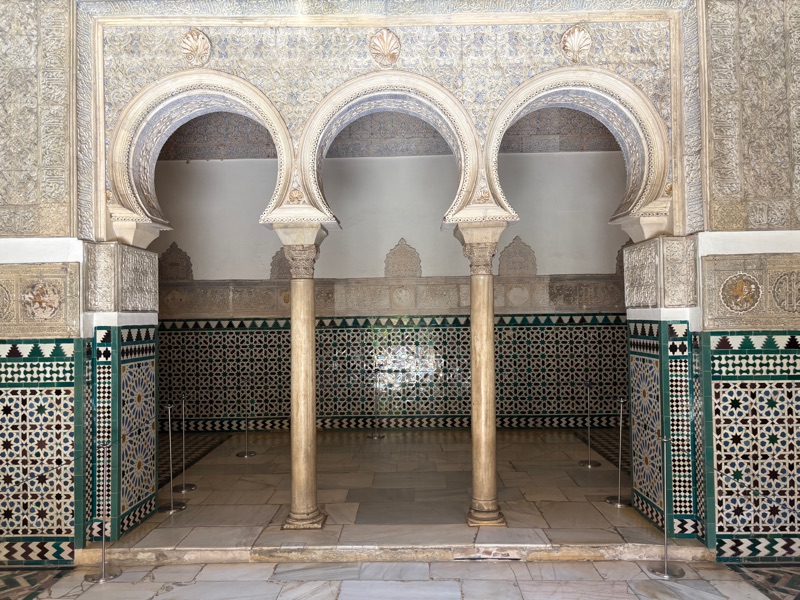
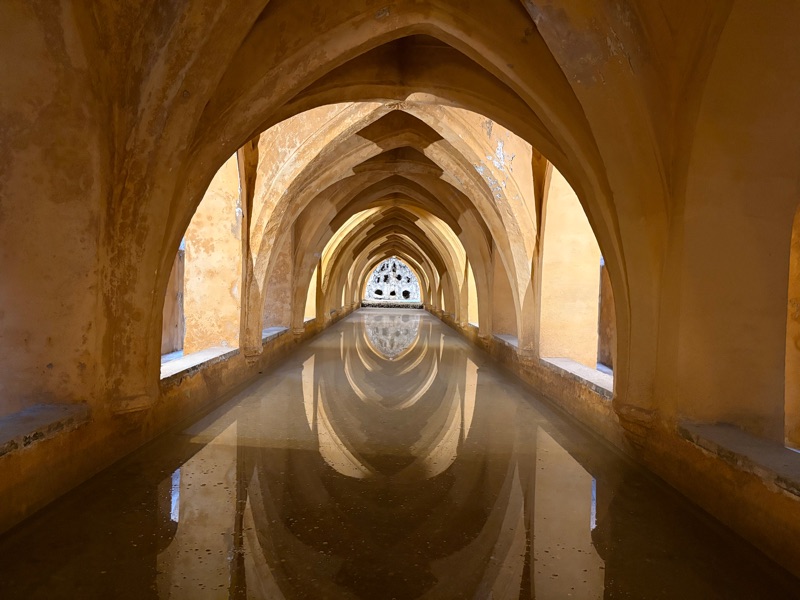
After yesterday’s whirlwind of activities, today was a day set aside for touring the famous Real Alcazar de Sevilla (Royal Alcazar of Seville). It’s a historic royal palace and one of the official residences of the Spanish royal family (although most certainly not during the summer when temperatures soar to above 100 degrees and the palace, for all its beauty remains unairconditioned).

It was formerly the site of the Islamic-era citadel of the city, begun in the 10th century and then developed into a larger palace complex by the Abbasid dynasty (11th century) and the Almohads (12th to early 13th centuries). After the Castilian conquest of the city in 1248, the site was progressively rebuilt and replaced by new palaces and gardens.

Today it remains one of the world’s great architectural treasures and a must-see destination for tens of thousands of visitors every year - who will stand in line (if they didn’t buy tickets online well in advance) even in the middle of a scorching August heat wave!

We breezed our way through the entrance past the lines and guided ourselves through the maze of rooms and fountains and gardens and history. It was one of those experiences where every time you look up from your audio guide (conveniently downloaded onto your phone and playing on your ear buds) you saw another and then another picture book image waiting to be captured. It was a job to just take it all in as so much was there to enjoy and appreciate.

And judging by the number of tourists all sharing the same experience, I can see that the Real Alcazar de Sevilla is much beloved all over the world!

It’s a definite must see destination if you ever get the opportunity to do so.

Fast, slow, and expensive and slow.

A few weeks ago I foolishly wondered if we would have a car in Spain. Now I can see how much of a burden that would be. The streets a so tiny, one way, and filled with tourists. When you think you have an open road it ethier is half metro lines or the road ends soon. Some roads are ethier so small or look so much like a sidewalk that I can’t even tell that they are roads! And of course there are occasional motorists on a sidewalk which makes it even harder to tell.

Walking is certainly a great option as you don’t have to obey traffic laws but if you want to go fast it’s obviously not great.

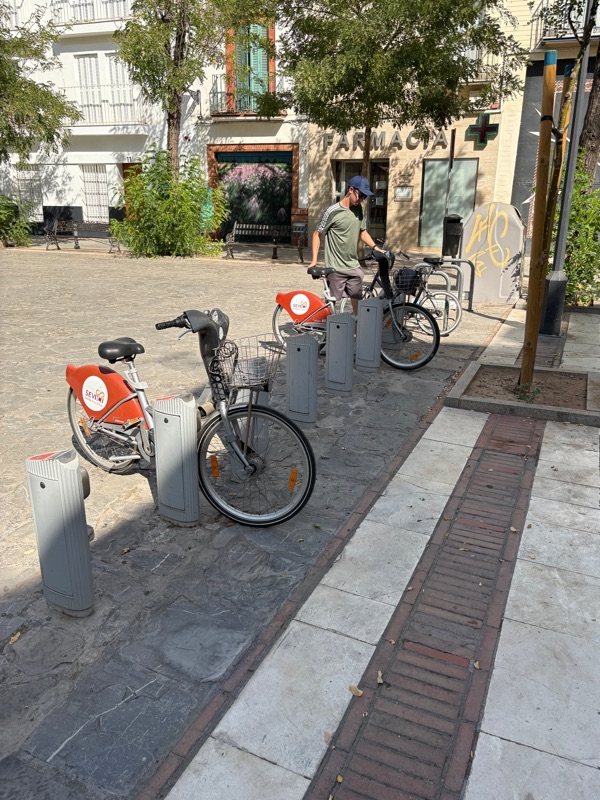
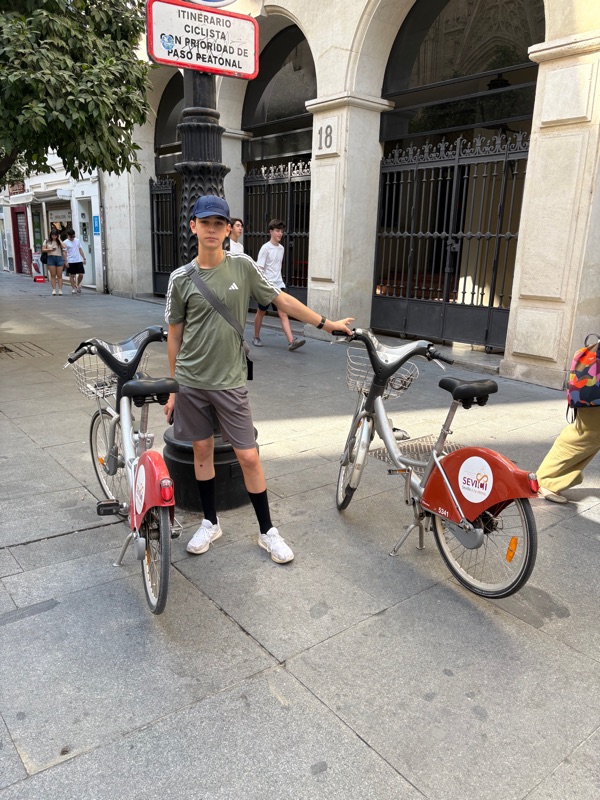
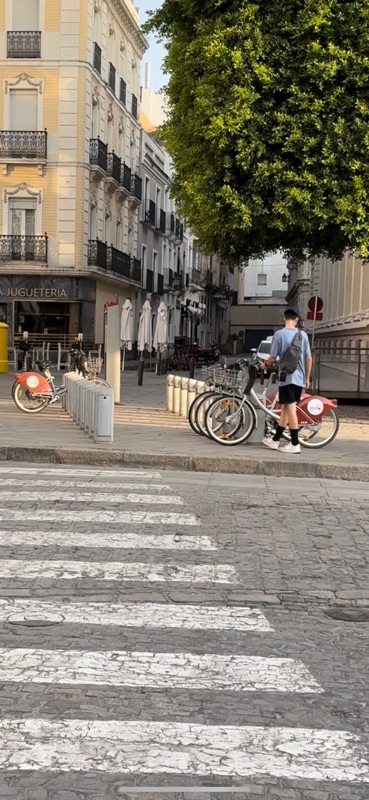
As we were leaving the bull ring yesterday, I recommended to Don Quixote that we take a bike rental service only available in Sevilla, Servici, to our next destination. We ended up not taking it though as Servici is available only at stations like this:

A station was not closely available so we decided to take a scooter that required an app called Voy. Voy was bad from the beginning. The online rental process took way too long for a first timer and only allowed one rental per mobile device, meaning both me and Don Quixote had to get the app. Additionally, the fee was a quarter euro a minute. But I haven’t even mentioned the worst part: it was very very slow. It couldn’t keep up with any bikes and half the city is a slow zone, which on any reasonable option would be fine but slow for this scooter meant you couldn’t even stay upright, that’s right, you had to push a heavy, actively re-gen breaking scooter for €1 per 4 minutes.

It should come without me saying that we ditched that option at 15 minutes and €4 and tried Servici. On our first night in Sevilla I had seen a sign that said something like €2.59 for a day at the Servici station close to our apartment and I couldn’t believe it. I’m still trying to figure out the pricing but it has become apparent that if you ride for less than thirty minutes your ride is free! We got the app and tried it. You just swipe and it releases! I’ve only had one bad experience with Servici but it was my fault: I left my daypack in the basket! But Don Quixote quickly remembered and I sprinted back to get my pack. Anyways when you’re done you just put the bike back in at a station and it stops the timer and you walk to your destination!

I love the idea of a potentially free shared bicycle! I wish Texas had these!

Featured Post

Welcome to Andalusian Adventures!

  Welcome to Andalusian Adventures - your passport to stories of our adventures in Spain’s Andalusian region. Whether you’ve been invited ...

Popular Posts